Culture isn’t something you observe from behind a velvet rope or through a tour bus window. It’s the conversation you strike up at a neighborhood market, the murals you stumble upon in an alley three blocks from your hotel, the way a local barista shapes foam into art that tells you something about this place. Real cultural connection happens when you step into the rhythm of a community and let it shift your perspective.
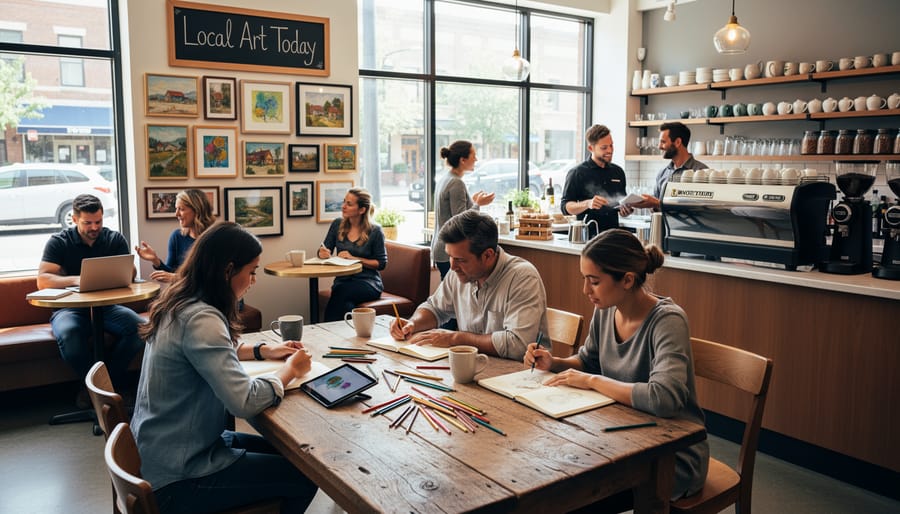
The most vibrant expressions of local culture don’t always live in galleries or concert halls. They’re tucked into independent bookstores hosting open mic nights, fashion boutiques where designers blend traditional textiles with street style, co-working cafés where artists swap ideas over coffee. These spaces blur the line between commerce and creativity, offering you a way in if you know how to look.
Too many travelers treat culture as a spectator sport. They check off landmarks, snap photos of street performers, buy a souvenir, and move on. But culture is participatory by nature. It asks you to show up, listen, contribute something of yourself. When you approach it that way, a simple afternoon becomes an exchange. You’re not just witnessing someone’s art or craft or music. You’re part of a living conversation that’s been unfolding long before you arrived and will continue after you leave.
This shift in perspective transforms everything. Suddenly the woman selling handwoven scarves at the Sunday market isn’t just a vendor. She’s a keeper of technique, a storyteller, someone who might invite you to her studio if you ask the right questions.
Culture as Conversation, Not Consumption
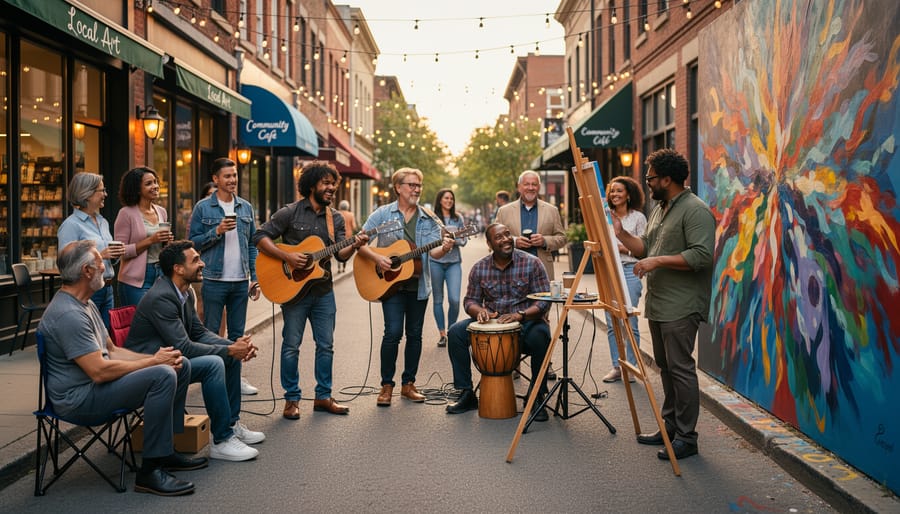
Walking into a gallery, snapping photos, and moving on? That’s consumption. Spending an hour with a street artist who explains the symbolism woven into their mural, then returning the next day to see how they’ve responded to community feedback? That’s conversation.
The difference matters because culture isn’t a static exhibit behind velvet ropes. It’s the exchange happening right now between someone creating and someone witnessing, and increasingly, community-based cultural practices show us that the most meaningful experiences occur when travelers step into that exchange rather than observe from the sidelines.
Think about the last time you stopped at a pop-up gallery in a neighborhood you’d never visited before. Maybe the artist was there, adjusting lighting or chatting with a neighbor. Did you ask about their process? Did you learn what inspired the piece, or why they chose this particular corner of the city to share their work? Those moments transform passive viewing into active participation. You’re no longer just a tourist, you’re part of the cultural ecosystem, even temporarily.
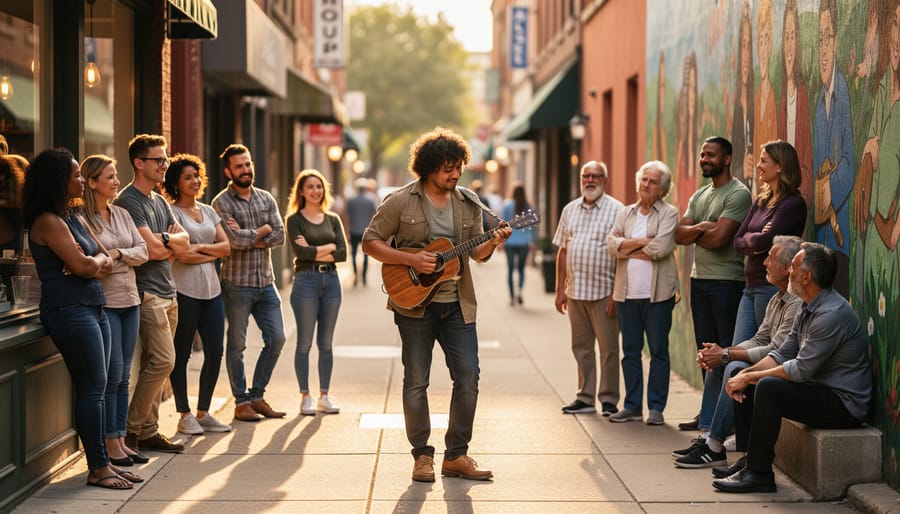
Street performances work the same way. Yes, you can record the entire act on your phone and keep walking. Or you can stay for the full set, notice how the performer reads the crowd, watch other people react, maybe drop cash in the hat and exchange a few words afterward. The performance doesn’t exist without the audience, and arts participation and social cohesion research confirms what we intuitively know: showing up and engaging creates connections that outlast any photograph.
Community workshops take this even further. Learning to mix natural dyes from a local textile artist, joining a ceramics session in someone’s studio, or practicing traditional dance steps at a neighborhood cultural center, these aren’t just activities to check off. They’re invitations into how people in this place express themselves, solve problems, and maintain traditions while adapting to modern life.
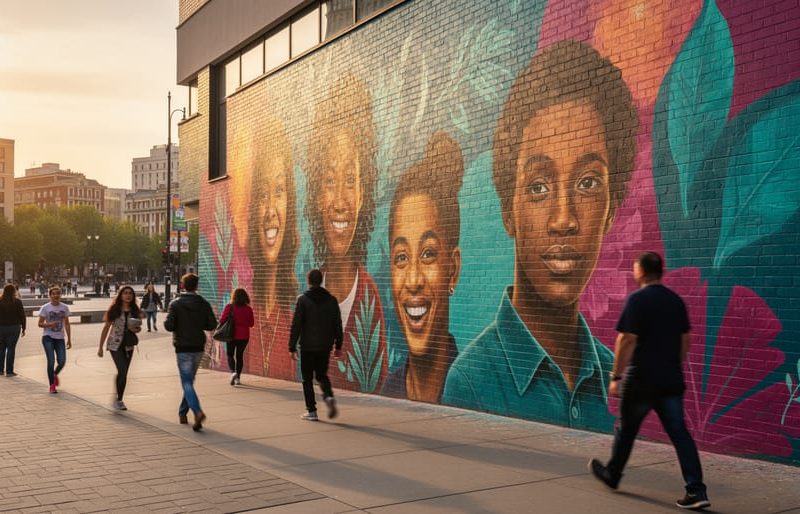
The shift from consumption to conversation means recognizing that visual art tells stories that only become complete when you engage with them. A mural isn’t just decoration; it’s someone’s commentary on their neighborhood, their history, their hopes. Local art scenes thrive on interaction, artists need audiences who ask questions, challenge assumptions, and contribute their own perspectives.
This approach requires slowing down, which runs counter to the “see everything” travel mentality. But speed and depth rarely coexist. Five conversations with local creators will teach you more about a place than fifty attractions ticked off a list.
Where Culture Lives: Beyond the Gallery Walls
The Beauty Counter as Creative Canvas
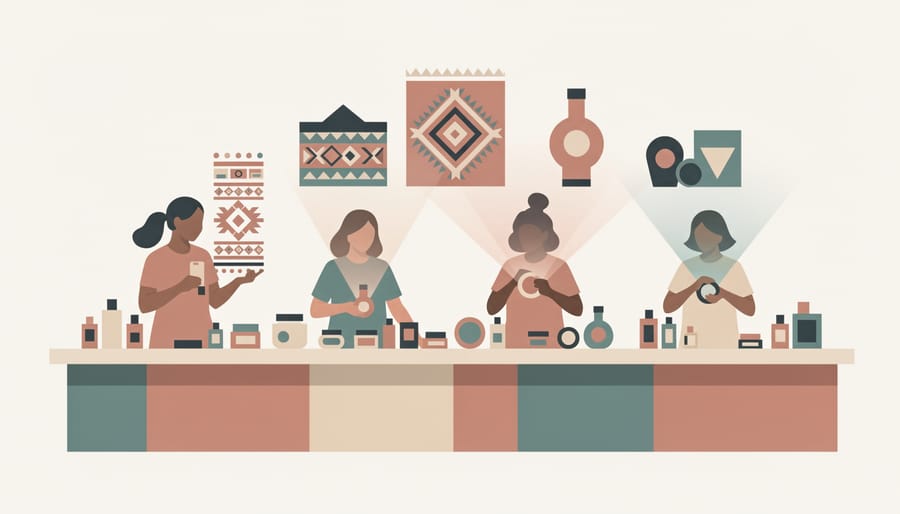
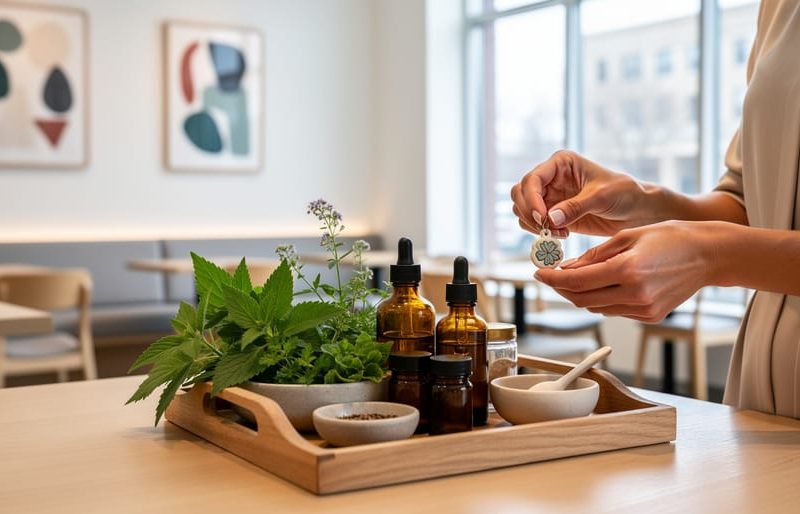
Walk into the right beauty studio in São Paulo, Montreal, or Bangkok, and you’ll discover more than skincare routines. You’ll find makeup artists mixing pigments inspired by local landscapes, indie brands bottling scents that capture neighborhood memories, and beauty counters displaying work that rivals any gallery installation.
These spaces function as cultural laboratories. A cosmetics line in Oaxaca might incorporate ancestral plant knowledge and traditional dye techniques. A Seoul pop-up transforms K-beauty into performance art, where application becomes storytelling. In Cape Town, makeup artists use faces as canvases to process identity, history, and resistance, creating looks that spark conversations about heritage and belonging.
The best discoveries happen off the beaten path the neighborhood beauty supply owned by a former theater makeup artist, the salon hosting monthly artist collaborations, the indie brand’s studio where you can watch formulations being made. These aren’t tourist stops. They’re creative hubs where local aesthetics get defined, challenged, and celebrated.
Just as regional food trends tell you what a place values, beauty trends reveal how communities see themselves and want to be seen. A vibrant lipstick color might reference a city’s architecture. A skincare line’s packaging could echo traditional textile patterns. Pay attention, ask questions, and you’ll learn more about local culture from a fifteen-minute conversation at a beauty counter than from three museum audio guides.
Fashion as Wearable Culture
When you put on a jacket hand-stitched by a designer three blocks from your Airbnb, you’re wearing someone’s manifesto. Local fashion isn’t about keeping up with trends, it’s about designers who refuse to disappear into the global mall aesthetic, who stitch their city’s rhythm into every seam.
Walk into independent boutiques and you’ll find what algorithms can’t replicate: clothing that speaks a specific geography. A collective in Mexico City reimagining traditional embroidery techniques on contemporary silhouettes. Berlin designers upcycling Soviet-era textiles into punk-inflected streetwear. Lagos tailors turning discarded fabrics into bold, architectural pieces that challenge Western minimalism’s dominance.
These aren’t just garments. They’re conversations about who gets to define beauty, which bodies matter, what heritage means when it collides with now.
Sustainable fashion collectives have become creative resistance hubs where makers share skills, materials, and studio space. They’re rewriting the rules, slow production over fast fashion, community investment over venture capital, repair culture over planned obsolescence. Shopping here means funding someone’s creative independence, not a corporation’s quarterly targets.
Pay attention to what local designers choose to preserve and what they deliberately reject. The fabrics they source, the bodies they design for, the price points they maintain, all of it communicates values. Fashion becomes wearable identity when it’s rooted in place rather than chasing a borderless, Instagram-friendly sameness that could exist anywhere and therefore means nowhere.
How to Actually Engage (Not Just Instagram It)
Real engagement starts with showing up as a learner, not a collector of content. Skip the quick snapshot and stay a while. Attend an artist talk at a local gallery, even if you don’t understand every reference, your presence supports the work, and you’ll catch insights about the creative process that Google can’t deliver. When you visit a studio or workshop, ask questions. Artists love talking about their techniques, their inspirations, the challenges of working in their city. That conversation matters more than the perfect grid post.
Buy directly from makers. That print you admire in a market stall, the handmade jewelry at a pop-up, the ceramics in a neighborhood shop, purchasing puts money directly into artists’ pockets and validates their work in tangible ways. You take home something with a story attached, something that connects you to a specific place and person rather than mass-produced souvenirs that could be from anywhere.
- Find a workshop or class that teaches a local craft, cooking technique, or art form. Spending two hours learning indigo dyeing or traditional embroidery creates muscle memory and appreciation you can’t get from watching.
- Join community events posted on local bulletin boards, community center calendars, or neighborhood Facebook groups, street festivals, open studios, craft fairs, poetry readings. These gatherings operate outside tourist circuits and welcome participants.
- Strike up actual conversations with creators. Shop owners, gallery attendants, street performers, these people are plugged into the local scene and can point you toward hidden gems if you’re genuinely curious rather than transactional.
- Support cultural spaces by becoming a member or donor, even temporarily. Small art centers, independent theaters, and community galleries operate on razor-thin margins. Your contribution keeps doors open for locals year-round.
Document your experience after you’ve lived it, not while you’re in it. Put the phone down during the performance, the workshop, the conversation. Capture one or two thoughtful images later that honor the experience rather than reduce it to content. The goal is participation, not documentation. You’ll remember more, absorb more, and connect more when you’re present in the moment instead of performing it for an audience that isn’t there.
The Social Network Effect: Finding Your Cultural Tribe
Social media has fundamentally changed how we discover culture, not through polished tourism boards, but through the unfiltered feeds of people already living it. A makeup artist in Seoul shares her studio process on Instagram; a textile collective in Oaxaca posts workshop dates on WhatsApp groups; a underground music venue in Berlin announces secret shows through Telegram channels. These aren’t advertisements. They’re invitations into existing communities.
The key is following actual creators, not influencers curating experiences for clicks. Search location tags from the neighborhood you’re visiting, not the city’s tourist center. Join Facebook groups for local artists, attend virtual studio tours on Zoom, or engage with TikTok accounts documenting daily creative routines. One DM asking where to find authentic local fashion often opens doors to sample sales, studio visits, and community gatherings tourists never hear about.
But here’s the tension: digital discovery works best when it leads to analog connection. Use platforms to identify your cultural entry points before you arrive, then put your phone down once you’re there. That artist whose work you’ve followed for months? Meeting them at their studio creates a relationship social media can’t replicate. The local beauty brand you discovered on Instagram? Shopping in their physical space means conversations with the founder, not just a checkout cart.
The mistake is treating social media as the destination rather than the map. It shows you where culture lives and who’s creating it. What happens next, the conversations, collaborations, and genuine exchanges, requires showing up in person, making eye contact, and staying long enough to matter.
Why This Matters More Than Ever in 2026
We’re living through a paradox. Every city’s downtown looks eerily similar, same chain coffee shops, same street style, same filtered aesthetics optimized for maximum likes. Algorithms feed us content based on what we’ve already seen, creating echo chambers of sameness. Travel has become a checklist of poses at predetermined spots, experiences engineered for shareability rather than substance.
This cultural flattening isn’t just boring. It’s erasure. When local artists can’t afford rent in their own neighborhoods because of tourism-driven gentrification, when traditional crafts disappear because fast fashion is cheaper, when authentic community spaces close to make room for concept stores, we lose irreplaceable perspectives, techniques, and stories that took generations to develop.
The resistance is happening in small, fierce pockets. Independent artists reclaiming public spaces. Beauty brands rooted in indigenous ingredients and ancestral knowledge. Fashion collectives prioritizing regional identity over global trends. These creators aren’t just making things, they’re preserving cultural memory and building new dialogues about identity, place, and belonging.
That’s why seeking out these voices matters. Supporting a local makeup artist costs the same as buying from a corporation, but one transaction funds a creative ecosystem while the other feeds homogeneity. Attending a neighborhood art opening instead of another rooftop bar creates demand for authentic spaces to survive.
The culture we want to see in 2036 depends on what we choose to engage with today. Every conversation with a local creator, every purchase from an independent maker, every hour spent in a community space instead of a tourist trap, these aren’t small gestures. They’re votes for a world where cities stay distinct, artists stay fed, and travel means genuine connection instead of performative consumption.
Culture doesn’t live in guidebooks or curated museum tours. It lives in the conversations you spark with a street artist explaining their mural, the local designer who shares why they chose that particular fabric, the barista who tells you about the neighborhood collective transforming the block. Every time you show up with genuine curiosity instead of just a camera, you’re not consuming culture, you’re creating it.
Next time you travel, ask yourself: What am I contributing to where you’re standing? Are you passing through, or are you connecting? The artists, makers, and communities who shape a place’s creative heartbeat aren’t performing for tourists. They’re inviting you into something real. Accept that invitation. Support their work. Join the exchange. That’s where culture actually happens.