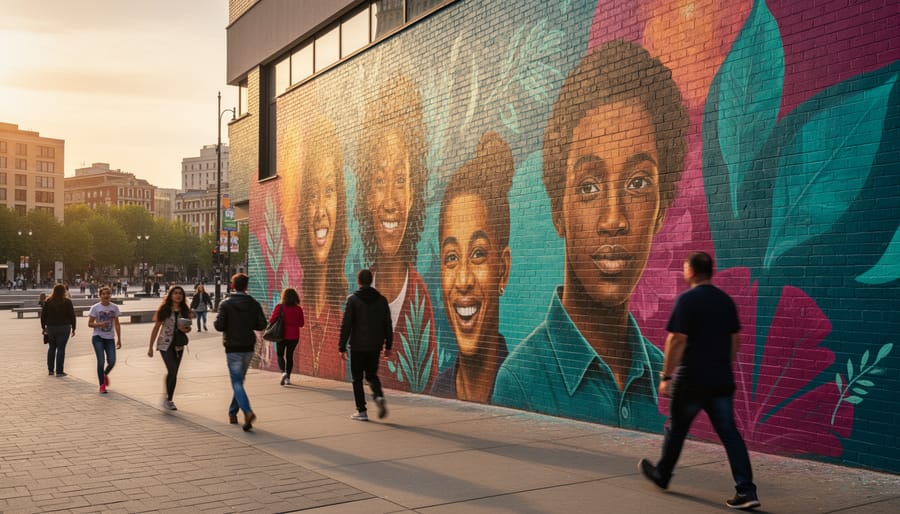
Visual communication art is the language every culture speaks without words, a vibrant exchange of stories, values, and identity through murals, sculptures, textiles, symbols, and public installations that shape the character of the places you visit. For travelers seeking authentic connections, learning to read this visual dialogue transforms passive sightseeing into meaningful cultural engagement. You’ll find it everywhere: in the street art that documents neighborhood histories, the indigenous patterns woven into market textiles, the temple carvings that preserve ancestral knowledge, and the community murals that celebrate local movements.
This art form matters because it reveals what communities choose to say about themselves, often bypassing language barriers entirely. A single mural in Mexico City’s Coyoacán district tells you more about the neighborhood’s political heart than any guidebook summary. The hand-painted signs in a Vietnamese market communicate hierarchy, tradition, and craft pride through color choices and calligraphy style alone.
Understanding visual communication art gives you a framework for respectful curiosity. You’ll know which pieces invite interaction and which demand reverence, how to ask about symbolism without reducing it to decoration, and where to look beyond tourist-facing displays to find the visual conversations locals have among themselves. This skill turns every street corner into a potential revelation and every cultural site into a dialogue you’re equipped to join, not just observe from the outside.
What Makes Visual Communication Art the Voice of a Community
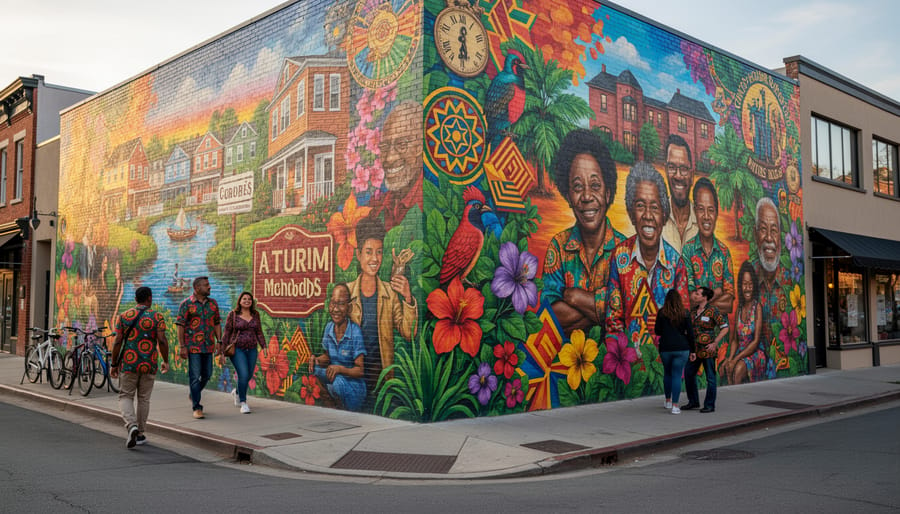
Walk down a street in any neighborhood that’s claimed its own voice, and the walls speak volumes. Not in whispers or shouts, but in bold strokes and layered images that cut straight to what matters here, now, and forever. A towering mural of a grandmother’s weathered hands kneading dough isn’t decoration. It’s memory made visible, culture refusing to fade into footnotes.
Visual communication art works where words stumble. Language fractures at borders and across generations, but an image of struggle, celebration, or loss registers immediately in the gut. When a community paints its heroes ten feet tall on brick walls, when it wraps electrical boxes in ancestral patterns, when it transforms an abandoned building into a canvas of collective grief or joy, it’s broadcasting who we are and what we will not let you forget.
This matters because official histories get written by people with offices and credentials. The stories painted on neighborhood walls get told by the people who live them. Research shows how street art shapes memory and urban identity in ways that formal monuments rarely achieve, creating layered narratives that shift with each new generation of artists adding their voice to the conversation.
Street installations and public art hold space for complexity that doesn’t fit in museum labels. A single mural can mourn displacement while celebrating resilience, critique power structures while honoring elders, document trauma while imagining futures. These visual stories bypass the gatekeepers and translation barriers that keep outsiders out and insiders silent. They insist on being seen, on being read, on starting conversations that might make someone in power uncomfortable.
The art doesn’t just reflect the community. It shapes it, arguing with itself across alleys and years, creating a visual language only locals fully fluent in context can parse completely.
The Living Canvas: Where Local Art Speaks Loudest
Street Art as Neighborhood Identity
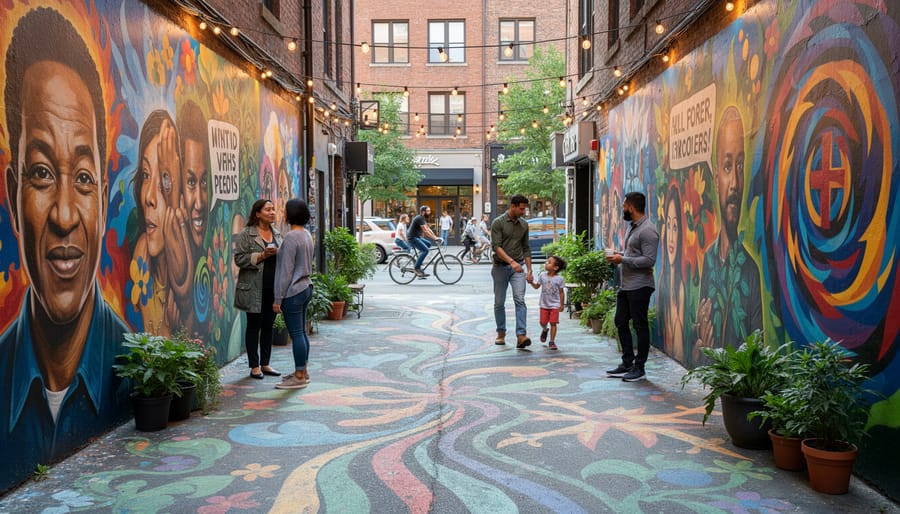
Walk through any neighborhood long enough, and you’ll notice the walls start talking. Not through posted signs or official markers, but through the layers of paint, paste-ups, and stenciled messages that locals have claimed as their own canvas. This is where visual communication art becomes fiercely territorial and deeply personal.
Street murals function as neighborhood signatures. A massive piece celebrating local heroes on a corner building isn’t random decoration, it’s a declaration of who matters here, whose stories get monumentalized. In Philadelphia’s neighborhoods, murals honoring community activists and cultural figures mark spaces with pride that official historical plaques rarely capture. The art says: this is ours, this is us.
But street art also serves as the neighborhood’s bulletin board for concerns no one’s officially addressing. When gentrification threatens, murals resist by depicting longtime residents, celebrating languages city signs ignore, or transforming corporate blank walls into portraits of the displaced. That visual defiance communicates belonging in the face of erasure.
Even the style tells you something. Intricate traditional patterns woven through contemporary street pieces signal cultural continuity. Raw wheat-paste posters and quick tags mark urgent conversations happening right now. The density, the layering, the care taken, or deliberately not taken, all communicate how a community sees itself and wants to be seen. You’re reading territorial pride, collective anxiety, and neighborhood identity painted large enough that no one can miss it.
Public Installations That Start Conversations
Sculpture plazas and interactive installations don’t just decorate public spaces, they create gathering points where communities process what matters most to them right now. Walk through any city during a cultural moment of significance and you’ll likely find temporary installations addressing it: climate memorials fashioned from reclaimed materials, participatory walls where residents attach messages of hope, kinetic sculptures that respond to human movement and invite play across generations.
These installations work differently than permanent monuments. They’re designed for participation, not passive viewing. A sculpture that requires collective action to activate becomes a shared ritual. Installation pieces that transform based on community input create ownership, everyone who contributes becomes part of the conversation.
Watch how locals interact with these pieces and you’ll understand what the community is grappling with or celebrating. Are people leaving offerings? Taking photographs in specific poses? Writing responses? The artwork creates permission for public dialogue about topics that might otherwise remain private, grief, joy, identity, change.
Temporary installations carry particular power because their impermanence matches the urgency of the conversations they’re sparking. They mark this moment, this struggle, this celebration, then make space for whatever comes next. The best ones leave something behind even after removal: a shift in how people see a space, a connection between strangers who created something together, or simply proof that their stories matter enough to take physical form.
Visual Markers of Cultural Continuity
Look closely at a ceramic pot in a Oaxacan market or the doorway carvings in a Balinese village, and you’re witnessing conversations that stretch back centuries. These aren’t museum pieces, they’re living techniques passed from grandmother to granddaughter, master to apprentice, maintaining visual vocabularies that predate written language.
Traditional weaving patterns tell migration stories. Architectural details encode agricultural calendars. Even the way paint is mixed from local earth connects today’s muralist to ancestors who left handprints in caves. When you notice these continuities, the same geometric motif appearing on both ancient temple walls and a contemporary cafe, you’re seeing culture refusing to be silenced by time, insisting that some truths deserve expression exactly as they’ve always been communicated.
Reading the Art: How to Decode Local Visual Stories
Symbols, Colors, and Cultural Codes
Walking through a new place, you might notice crimson walls on temples, blue-painted doorways, or patterns that repeat across textiles, pottery, and building facades. These aren’t random aesthetic choices, they’re visual shorthand for beliefs, histories, and values that locals immediately understand. What appears decorative to an outsider often communicates protection, prosperity, mourning, celebration, or spiritual significance to those who grew up with these symbols.
Color carries particularly potent meanings that shift dramatically across cultures. White signals purity and weddings in some traditions, death and mourning in others. Red might represent luck and joy in one community, danger or warning elsewhere. Before you snap photos or wear clothing in certain hues, observe how locals use these colors and in what contexts, weddings, funerals, festivals, sacred spaces, to understand their weight.
Recurring motifs tell you what a community values. Hands, eyes, spirals, specific animals, geometric patterns, seasonal themes each carries layered meaning. A symbol might reference creation stories, offer protection against misfortune, mark clan affiliation, or celebrate agricultural cycles. The same visual element can mean entirely different things separated by just a few hundred miles, so resist the urge to assume universal interpretations.
Pay attention to where symbols appear and who creates them. Art on public buildings versus private homes, permanent installations versus temporary festival decorations, work by established elders versus emerging artists, all these contexts add crucial meaning to the visual language you’re learning to read.
The Artists Behind the Vision
Meeting the artists who create the visual communication you encounter transforms observation into genuine understanding. These creators aren’t just making pretty pictures, they’re translating lived experiences, community struggles, celebrations, and histories into visual form that speaks across language barriers.
Start by visiting galleries during opening receptions or artist talks, which often welcome casual attendees. Many artists maintain studios in accessible neighborhoods where they work with doors open, inviting passersby to watch and ask questions. Markets, community events and festivals frequently feature artist booths where creators are present, eager to share the stories embedded in their work.
When you approach an artist, lead with genuine curiosity rather than immediately pulling out your camera or wallet. Ask what inspired a particular piece, what techniques they’re using, or what they hope viewers will understand. Most artists light up when someone shows authentic interest in their process rather than treating their work as exotic decoration.
Listen for the layers beneath surface imagery. A mural depicting local plants might commemorate displaced families, reference indigenous land knowledge, or protest environmental destruction. The artist who painted it can reveal whether those flowers represent resilience, loss, or resistance, context that transforms your understanding completely.
Social media has made finding local artists easier, but nothing replaces the texture of in-person conversation. Artists often know other creators, alternative spaces, and upcoming projects not advertised to tourists. These connections lead you toward the visual communication happening in back rooms, temporary installations, and collaborative works that reveal how a community sees itself right now, in this moment, through the eyes of those who call it home.
Art as Cultural Bridge: Connecting Through Visual Expression
Standing before a vibrant mural in a neighborhood where you don’t speak the language, you can still understand something profound is being communicated. Visual communication art dissolves the barriers that words create, offering travelers an immediate, visceral connection to cultures that might otherwise feel impenetrable. A painted wall tells you what matters here, what a community celebrates, mourns, resists, or remembers, without requiring translation.
This accessibility makes visual art uniquely democratic. You don’t need cultural insider knowledge or linguistic fluency to feel the emotion radiating from a street portrait, to recognize the pride in a community garden’s mosaic benches, or to sense the urgency in protest stencils covering a plaza wall. The visual language speaks directly to our shared human capacity for color, form, and symbol, creating understanding that bypasses the intellect and lands somewhere deeper.
For travelers willing to slow down and really look, this creates opportunities for connection that formal cultural institutions can’t replicate. The grandmother watching you photograph her neighborhood’s mural might not share your language, but your genuine attention to what her community has created becomes its own form of communication. Your respectful presence at a public art opening signals interest and openness, even when conversation stays surface-level.
Visual art also serves as soft entry point for harder conversations. A mural depicting historical trauma or social injustice invites you to acknowledge realities you might otherwise miss as you move through picturesque streets. The installations in a gentrifying neighborhood speak to displacement and resistance in ways that polite guidebook prose never will. By meeting communities through their visual expressions first, you encounter them as complex, creative, and self-determining, not as exotic backdrops or poverty statistics.
This bridge works both directions. Local artists often create with the awareness that outsiders will see their work, intentionally crafting messages that educate visitors while affirming community identity. They’re inviting you into conversation, offering visual handshakes across cultural divides.
Supporting Local Art Ecosystems While You Travel
Supporting local art doesn’t require grand gestures, it starts with attention and intentional choices. When you encounter a mural that stops you in your tracks or a street installation that shifts your perspective, resist the impulse to snap a photo and move on. Pause. Look for artist signatures or QR codes that link to their portfolios. Many creators embed contact information directly into their public work, inviting connection rather than passive consumption.
Seek out artist-run galleries, cooperative spaces, and pop-up exhibitions instead of defaulting to tourist-oriented galleries. These venues typically return a much higher percentage of sales directly to creators. When you purchase art, whether a print, handmade textile, or small sculpture, ask about the process behind it. This conversation validates the artistic labor and often reveals community stories you wouldn’t access otherwise.
Follow local artists on social media before you even arrive in a destination. Engagement there, genuine comments, shares that credit the creator, supporting crowdfunding campaigns, matters more than you’d think. It builds momentum that can translate into commissions, exhibitions, and sustainable creative careers.
Consider hiring local artists as guides when you plan activities locally. Many offer walking tours that dive deep into neighborhood art histories, techniques, and current cultural conversations. These experiences funnel resources directly to creators while giving you context that transforms how you see subsequent work.
Respect boundaries around photographing art. Some pieces, particularly those addressing trauma, protest, or sacred themes, aren’t meant for your Instagram grid. When you do share, always credit the artist by name and location, using their preferred handles. This attribution becomes discovery fuel for their work, creating pathways for future opportunities and sales that extend well beyond your visit.
When you pause to truly see the art around you, every wall, every corner, every unexpected splash of color becomes an invitation to understand a place from the inside out. Visual communication art transforms how we travel, shifting us from observers to participants in ongoing cultural conversations. These artistic expressions offer both reflection and revelation, showing us how communities see themselves while opening windows into experiences vastly different from our own. Next time you wander through unfamiliar streets, let the art slow you down. Follow the murals that map neighborhood pride, trace the symbols that carry ancestral wisdom, seek out the installations sparking contemporary dialogue. Through local culture connections formed through visual storytelling, you’ll discover that the most profound travel moments often happen standing still, reading the stories painted on the walls.