The best window for launching seasonal activities in kindergarten classrooms starts two to three weeks before each season officially begins, giving young learners time to observe and celebrate the transition as it unfolds around them. In the Northern Hemisphere, that means introducing autumn themes in late August, winter activities by late November, spring explorations in early February, and summer celebrations by mid-May. Southern Hemisphere educators flip this calendar accordingly, beginning autumn units in late February.
Regional climate shapes everything. A kindergarten in Minnesota will experience dramatically different seasonal markers than one in Southern California or coastal Florida, where autumn leaves might never turn golden and snow rarely falls. The most engaging seasonal curriculum mirrors what children actually see outside their classroom windows and in their neighborhoods, connecting abstract calendar concepts to lived experience.
Temperature shifts, daylight hours, local festivals, and agricultural cycles all influence when specific activities resonate most powerfully with five- and six-year-olds. A harvest unit lands beautifully in October across much of North America, but in regions with different growing seasons, tying activities to local farmers’ markets and community traditions creates more authentic learning. Children grasp seasons best when they can touch, smell, and participate in what makes each period distinct in their own backyard.
Smart educators build flexibility into their seasonal plans, watching for the first frost, the arrival of migratory birds, or the bloom of native flowers to launch related activities exactly when nature provides the richest teaching moments.
Quick Answer: Best Timing Windows for Kindergarten Seasonal Activities
Start planning seasonal activities 4-6 weeks before major holidays and cultural celebrations to allow time for materials gathering, parent communication, and community coordination. Monthly seasonal themes need 2-3 weeks of preparation, while weekly nature observations and art projects require minimal advance setup, just consistent scheduling.
Fall activities launch best in early September when outdoor exploration remains comfortable and harvest themes feel timely. Winter celebrations require the longest lead time due to diverse cultural traditions and indoor space coordination. Spring planting succeeds when scheduled 2-3 weeks after the last frost date in your region, allowing children to witness growth cycles before summer break. This staggered approach prevents planning overwhelm while maintaining engagement throughout the school year.
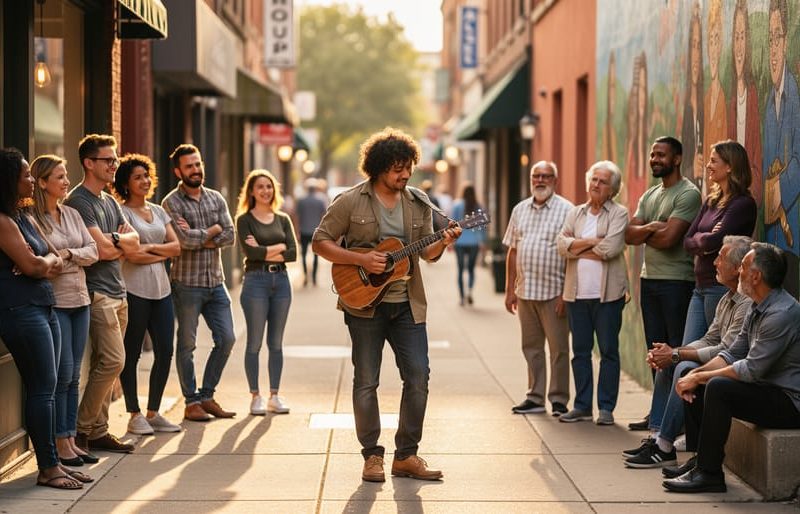
Consider your community’s cultural calendar when setting dates. Coordinating kindergarten activities with local art festivals, seasonal markets, or cultural celebrations deepens children’s connection to their surroundings and creates meaningful family participation opportunities beyond the classroom.
Seasonal Activity Timing Throughout the Year
Fall Activities (September-November)
September launches fall kindergarten activities with cooler weather and abundant natural materials. Start harvest-themed learning in early September while farmers markets overflow with pumpkins, gourds, and apples, children connect abstract “harvest” concepts to real food sources they can touch and taste.
Apple orchard field trips work best mid-September through mid-October, before weather turns unpredictable and trees are picked bare. Book these excursions at least three weeks ahead, as orchards fill quickly with school groups. Pair the trip with in-class apple tasting, graphing favorite varieties, and cooking projects the following week.
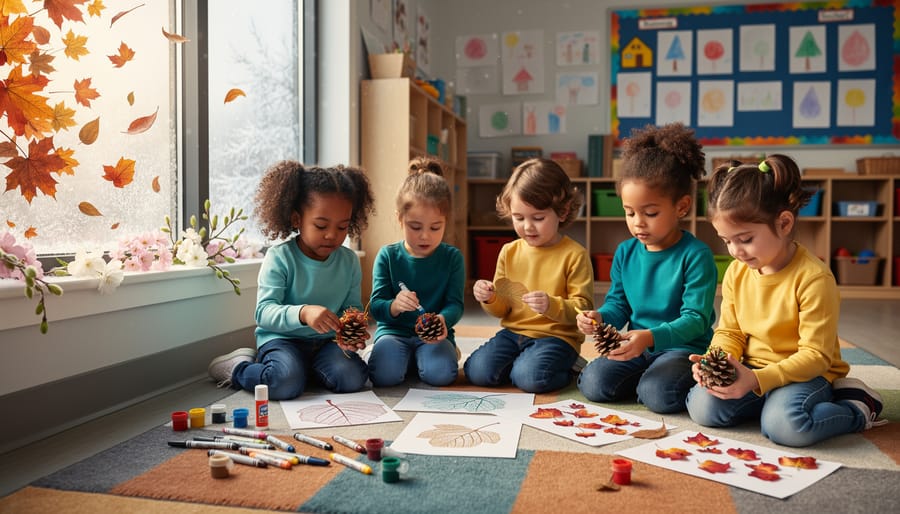
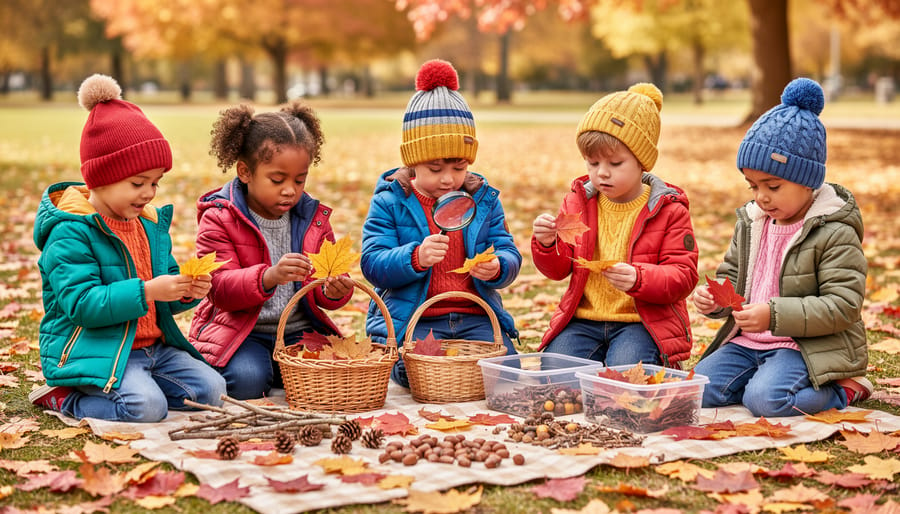
Leaf collection walks peak differently by region, early October in northern climates, late October to early November in southern areas. Time these projects when leaves show vibrant color but haven’t yet blown away or turned soggy. Create classroom leaf museums immediately after collection, while specimens are fresh and children remember where they found each treasure.
Cultural celebrations cluster in October and November. Halloween activities should accommodate diverse family beliefs, many educators frame these as “fall costume days” or harvest celebrations. Thanksgiving timing varies by country, but harvest gratitude themes translate across cultures. Connect classroom activities to local harvest festivals and community art fairs happening throughout October, letting children see their learning reflected in neighborhood celebrations.
Winter Activities (December-February)
Winter’s arrival transforms kindergarten classrooms into hubs of creativity and cultural exploration, but timing these activities requires more advance planning than other seasons. Start organizing winter celebration activities in late October, six to eight weeks before December holidays, to accommodate diverse family traditions and allow meaningful cultural education rather than rushed decoration.
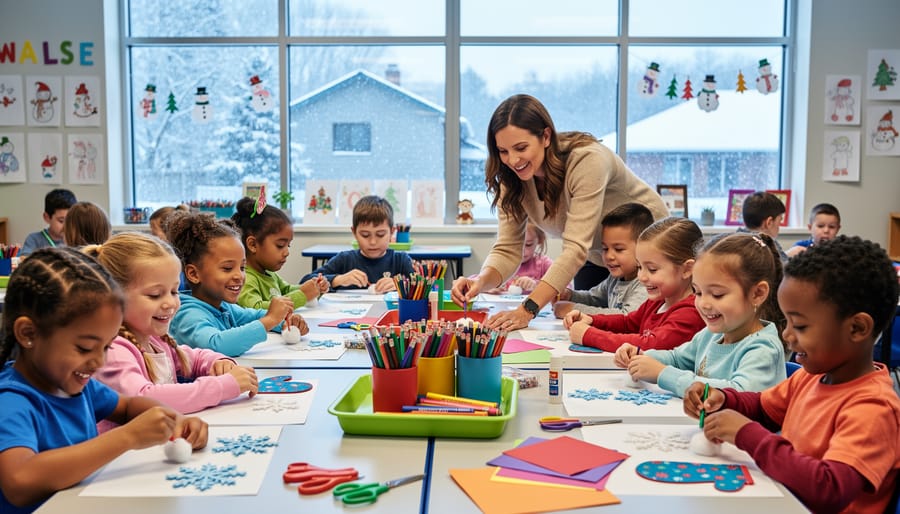
December activities peak during the second and third weeks of the month, before families scatter for winter break. This window works best for light festival studies (Hanukkah, Diwali, Santa Lucia Day, winter solstice), inclusive “celebrations around the world” themes, and community art projects. Schedule hands-on activities like paper snowflake cutting, winter nature collages using pinecones and evergreen sprigs, and storytelling circles featuring global winter tales during this concentrated period.
January and February shift focus to indoor creative exploration. Plan sensory play with artificial snow, ice experiments, and “hibernation” dramatic play areas starting the first full week back from break, when children need gentle re-entry into routine. Late January through mid-February suits collaborative mural projects depicting winter landscapes, providing extended creative work that carries through gray weather days.
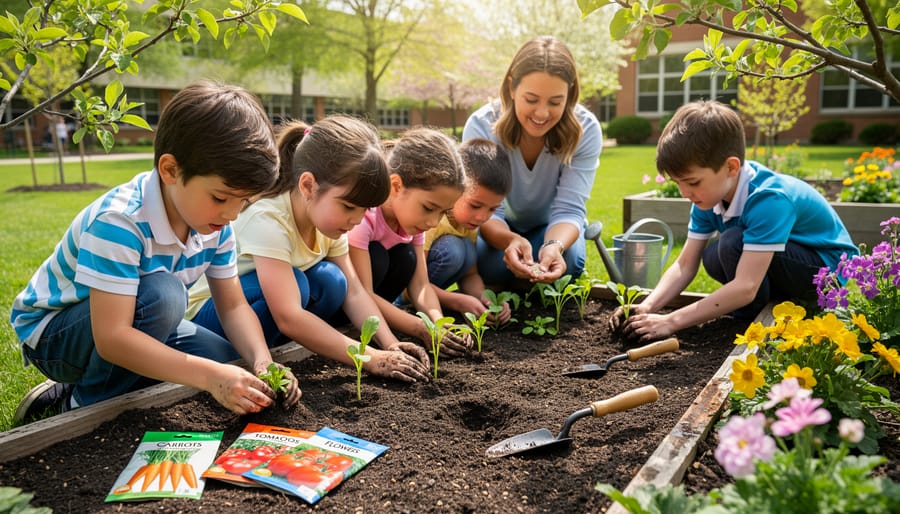
February’s final week transitions toward spring anticipation, plant seed-starting projects or early bird observation walks that bridge seasons while maintaining winter’s contemplative indoor rhythm.
Spring Activities (March-May)
Spring’s arrival creates perfect momentum for outdoor kindergarten activities, with March through May offering increasingly longer daylight and warmer weather that energizes young learners. The season’s natural renewal theme provides built-in teaching moments that kindergarteners can observe directly.
Garden Projects and Growth Themes
Start seed-starting projects indoors in early March, giving children 4-6 weeks to observe germination before transplanting outdoors in late April or early May (depending on your region’s last frost date). This timeline lets kids experience the complete growth cycle while spring is still actively unfolding around them. Community gardens often welcome kindergarten groups for planting days in April, contact local coordinators in February to secure spots.
Spring Festivals and Cultural Celebrations
March and April bring diverse cultural celebrations: Holi festivals, cherry blossom viewings, Passover, Easter, Ramadan, and Nowruz. Schedule related activities 1-2 weeks before the actual holiday to allow for family conversations at home. Many communities host spring art festivals in May, perfect opportunities to connect classroom learning with local creative culture.
Outdoor Exploration Activities
Plan nature walks and outdoor art projects for mid-April through May when weather becomes reliably comfortable. Schedule outdoor activities for late morning (10-11am) when spring temperatures peak but before afternoon fatigue sets in.
Summer Transition Activities (June)
June marks a tender transition time in kindergarten, children sense change coming even if they can’t quite name it yet. The seasonal activities you choose now help them process endings while building excitement for summer adventures ahead.
End-of-Year Celebration Timing
Schedule your main kindergarten celebration during the second-to-last week of school rather than the final days. This gives children space to participate fully without the distraction of imminent departure. Portfolio showcases work beautifully at this point, let each child share their favorite project from throughout the year while families circulate through the classroom. Add simple refreshments featuring summer fruits like strawberries and watermelon to signal the seasonal shift.
Summer Readiness Activities
The last full week offers perfect timing for practical summer preparation. Create “summer explorer kits” where children decorate cloth bags and fill them with nature journals, colored pencils, and observation guides. Practice summer safety through role-play scenarios, water safety, sun protection, stranger awareness, framed as adventure preparation rather than fear-based warnings.
Garden activities take on special meaning now. If your class planted anything in spring, harvest and taste it together. Children leaving kindergarten with dirt under their fingernails and seeds in small envelopes carry summer learning potential home with them, ready to grow.
Factors That Shift Activity Timing
Regional and Climate Considerations
Geographic location fundamentally reshapes when kindergarten activities work best. A fall apple-picking trip thrives in September for Vermont classrooms but shifts to November in Southern California, where autumn arrives late. Climate dictates not just calendar placement but activity feasibility, northern schools pivot outdoor plans indoors during harsh winters, while subtropical regions maintain year-round nature exploration.
Weather unpredictability demands backup plans. Coastal areas contend with fog that derails morning garden walks; desert regions require early-day scheduling before heat spikes. Smart educators track local patterns: monsoon seasons, first frost dates, bloom schedules for spring flower studies.
Urban versus rural settings matter equally. City kindergartens coordinate seasonal activities around park availability and event permits, often booking months ahead. Rural classrooms access farms and forests more spontaneously but face transportation constraints that compress activity windows.
Consider your community’s microclimate too. A classroom three blocks from the ocean experiences different conditions than one inland. This hyper-local awareness ensures seasonal activities connect authentically to children’s lived environment rather than generic calendar dates.
Cultural and Community Calendars
Timing kindergarten activities around local cultural events creates authentic learning opportunities that extend beyond the classroom. Rather than relying solely on mainstream seasonal markers, research your community calendar for festivals, gallery openings, public art installations, and cultural celebrations that align with your curriculum themes.
Many communities host harvest festivals in October, winter light celebrations in December, spring art fairs in May, and cultural heritage events throughout the year. Building kindergarten activities around these events, like preparing artwork for a community exhibition or learning traditional crafts before attending a cultural festival, gives children a stake in their local culture and helps traveling families integrate into new communities more quickly.
Contact local cultural centers, libraries, and arts organizations six to eight weeks before you want to participate. Many welcome kindergarten groups for special tours or hands-on workshops. This advance planning allows you to align classroom activities with the event’s themes, creating a meaningful arc from preparation to participation to reflection.
For families exploring new regions, seek out neighborhood festivals and seasonal markets. These informal gatherings often reveal a community’s character more authentically than scheduled tourist activities.
Developmental Readiness Windows
Kindergarten children’s readiness for different activities shifts predictably as they mature through the school year. September and October work best for activities emphasizing routine, simple patterns, and immediate sensory experiences, think touching leaves, sorting acorns by size, or tasting seasonal fruits. Children at this stage thrive with short, concrete tasks that build classroom community.
By November through January, most kindergarteners can handle more complex projects involving multiple steps, like creating winter collages or planning a class celebration. Their attention spans lengthen, and they begin connecting cause and effect in seasonal changes.
February through April represents peak developmental readiness for collaborative seasonal projects. Children can now work in small groups, follow extended timelines (planting seeds and observing growth), and express seasonal themes through creative writing or dramatic play.
Energy patterns also matter. Morning hours suit cognitively demanding seasonal activities like nature journaling or measurement projects. Save active outdoor exploration and movement-based seasonal games for late morning or after lunch, when children need to release physical energy. Quiet seasonal story time or reflection works best before transitions home.
Planning and Preparation Timeline
Different seasonal activities require different preparation windows. A simple harvest-themed story circle might need just a few days of planning, while a community-connected spring festival could require two months of coordination. Understanding these timelines prevents last-minute stress and creates space for richer, more meaningful experiences.
Activity Complexity and Lead Time
Quick classroom celebrations, changing seasonal displays, reading theme-appropriate books, or simple craft projects, typically need one to two weeks of preparation. This gives you time to gather materials, preview activities, and adjust for your specific group’s interests.
Medium-scale activities like field trips to apple orchards, visits from local artists, or outdoor nature exploration require three to four weeks. You’ll need to coordinate schedules, arrange transportation if needed, and ensure all families receive information and permission forms with enough notice to plan.
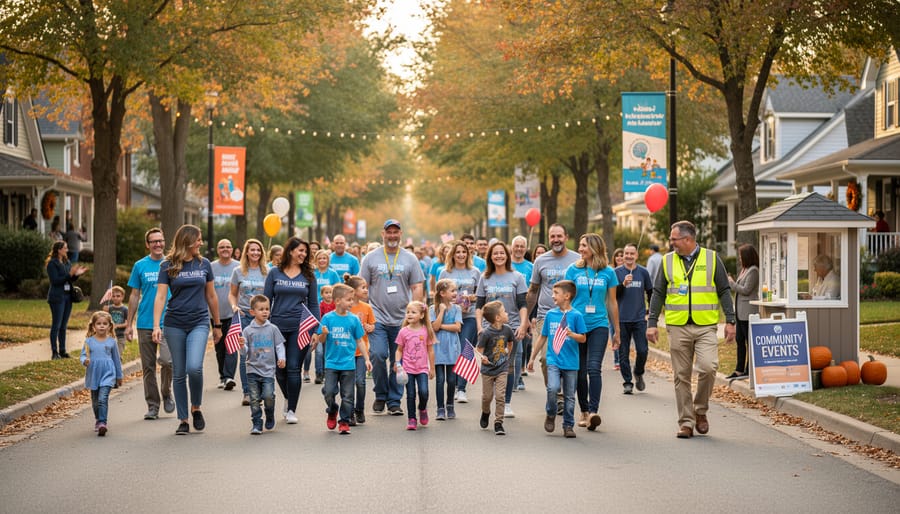
Large community-connected events, participating in neighborhood art walks, hosting family seasonal celebrations, or coordinating with local cultural organizations, demand six to eight weeks of lead time. These experiences involve multiple stakeholders, require venue coordination, and benefit from extended family communication to build anticipation and ensure participation.
The Planning Sequence
For activities that extend beyond your classroom, follow this preparation timeline:
- Identify seasonal themes and desired community connections 6-8 weeks before the planned activity date, researching local events and cultural celebrations that align with learning goals.
- Reach out to local artists, venues, or cultural organizations 4-6 weeks ahead to confirm availability, discuss collaboration possibilities, and understand any requirements or costs.
- Gather materials, finalize activity details, and create backup plans 3-4 weeks prior, accounting for weather contingencies for outdoor activities.
- Send family communications with clear details, cultural context, and participation expectations 2-3 weeks before, allowing time for questions and family scheduling.
- Complete final preparations during the week of the event: confirm logistics, prepare children through conversations and preview activities, and ready any physical materials or spaces.
Build flexibility into your timeline. Some community partners need longer coordination windows, especially popular local venues or artists with full schedules. Starting conversations early creates options rather than limitations.
Keep a rolling calendar that maps seasonal themes against school breaks, local festival dates, and developmental milestones. This bird’s-eye view reveals natural planning windows and helps you distribute preparation effort across the year rather than concentrating it during already-busy periods.
Aftercare: Extending Seasonal Learning Beyond Events
The real learning from seasonal activities happens in the days and weeks that follow. Transform one-off events into lasting knowledge by creating reflection rituals immediately after each celebration, circle time discussions where children share their favorite moments, drawing activities that capture what they learned, or movement games that reinforce seasonal concepts they explored.
Build bridges between seasonal events and daily curriculum by revisiting themes through different modalities. After a fall harvest festival, incorporate counting activities with acorns collected during the event, read stories about autumn that echo what children experienced, and invite families to share their own seasonal traditions. This cyclical approach reinforces learning while honoring diverse cultural perspectives.
Create seasonal stations in your classroom that evolve throughout the year, displaying artifacts and materials from recent activities. A nature table might showcase spring seedlings children planted, transitioning to summer shells they collected. These physical reminders keep seasonal learning alive and accessible, allowing children to independently explore and build on their experiences.
Connect seasonal activities to your local community’s rhythm by maintaining relationships with venues and participants after events conclude. The artist who led a winter lantern workshop might return for spring mural painting. The orchard owner could provide updates on tree growth children observed. These ongoing connections demonstrate that learning extends beyond single activities and roots children in the cultural life of their place, turning seasonal celebrations into sustained engagement with their community’s creative and natural cycles.
Common Questions About Kindergarten Seasonal Activity Timing
How much lead time do you actually need to plan these seasonal activities? Should you start preparing your spring garden unit when snow is still on the ground? And what happens when the weather refuses to cooperate with your outdoor plans? These timing questions come up repeatedly for kindergarten teachers and parents organizing seasonal experiences.
How far in advance should I plan seasonal kindergarten activities?
Simple classroom activities need two to three weeks of lead time for gathering materials and coordinating with other teachers. Community-connected events like festival visits or local art collaborations require four to six weeks to arrange permissions, transportation, and partner schedules.
Can seasonal activities overlap between seasons?
Yes, transitional activities work well during seasonal shifts, starting spring planting in late winter or exploring early autumn changes in late August. These overlaps help children notice gradual environmental changes rather than abrupt seasonal switches.
What should I do when weather cancels outdoor seasonal activities?
Build flexibility into your seasonal planning by having indoor alternatives ready: nature collections brought indoors for observation, window-based weather studies, or virtual connections with community gardens. Keep core learning objectives while adapting the setting.
When should I introduce themes for the upcoming season?
Introduce next-season themes during the final two weeks of the current season. This gives children anticipation while still honoring present experiences, and it helps smooth transitions in classroom rhythm and focus.
Balancing multiple cultural celebrations within one season presents another common timing challenge. Rather than cramming everything into December or trying to celebrate every tradition equally, focus on depth over breadth. Select two or three cultural celebrations that connect to your community or student families, and explore them thoroughly with stories, art projects, and possibly community visits. This approach respects diverse traditions while maintaining manageable classroom schedules and giving children meaningful exposure to different cultural practices.
The key is treating timing as a flexible framework rather than rigid dates. Your specific kindergarten group’s energy, the actual weather patterns in your location, and unexpected community opportunities will all influence when activities happen. Start with these general timing guidelines, then adjust based on what you observe in your classroom and community throughout the year.
Key Terms
- Seasonal Window
- The optimal timeframe for introducing and completing a themed activity, typically spanning 2-4 weeks to allow full exploration without losing momentum or relevance to the current season.
- Cultural Calendar
- The collection of community festivals, local celebrations, and cultural observances that influence when and how seasonal kindergarten activities connect to the broader community experience.
- Developmental Readiness
- The point at which kindergarten-aged children possess the cognitive, physical, and social-emotional skills needed to meaningfully engage with a particular seasonal activity or concept.
- Transition Period
- The two-to-three week span between seasons when educators blend themes from the ending and approaching seasons, helping children recognize environmental and calendar changes gradually.
- Lead Time
- The advance preparation period required before launching a seasonal activity, ranging from one week for simple classroom celebrations to six weeks for community-connected events involving outside partners or special materials.
Understanding these key terms helps you communicate more effectively with other educators and parents when coordinating seasonal experiences. Each concept plays a role in creating well-timed activities that resonate with children while respecting the rhythms of your specific community and classroom.